Pharma Industry in Ireland: What Graduates and International Students Should Know
Ireland’s pharma industry is strong, but graduate jobs are competitive. Learn where roles are, what skills matter and what to check before applying.

Ireland’s pharma industry is one of the strongest parts of the Irish economy, but that does not mean every science graduate will easily get a job.
For students and graduates, the real question is not just “Is pharma big in Ireland?” The better question is: which pharma roles are realistic for your background, what evidence do employers look for, and does your work permission fit the hiring timeline?
The short answer: Ireland can be a very strong place to build a pharma or biopharma career, especially if you have a background in science, engineering, biotechnology, chemistry, pharmacy, quality, validation, manufacturing, supply chain or data. But entry-level roles are competitive, and international students need to be especially careful about Stamp 1G, employment permit rules and employer sponsorship assumptions.
Quick verdict: is pharma a good career route in Ireland?
Yes, pharma can be a good career route in Ireland for graduates, particularly if you can show practical evidence of scientific, technical or regulated-work skills.
Ireland has a large pharma and biopharma presence. IDA Ireland describes the country as a major biopharma location and says more than 90 pharmaceutical companies operate in Ireland, with 45,000 people employed in IDA client companies in the sector.
The sector is also economically important. CSO figures for 2025 show that exports of medical and pharmaceutical products increased to €138.6 billion and represented 53.2% of Ireland’s total goods exports that year.
But graduates should avoid a common mistake: assuming that a strong sector automatically means easy graduate entry. Pharma employers often screen for evidence of accuracy, technical understanding, documentation discipline, lab or manufacturing experience, and the ability to work in regulated environments.
A strong applicant usually shows at least some of the following:
- relevant lab, placement, project or internship experience
- awareness of GMP, quality systems or regulated documentation
- strong technical fit for the role family
- comfort with data, procedures and detail
- willingness to work outside Dublin or in site-based roles
- clear understanding of work permission if they are an international student
Why Ireland has such a large pharma industry
Ireland’s pharma industry is not just made up of office roles in Dublin. A large part of the sector is built around manufacturing, biopharma production, quality, testing, supply chain and global exports.
For graduates, this matters because many opportunities are attached to specific sites rather than generic “business graduate” vacancies. Pharma jobs may be based in manufacturing plants, quality labs, validation teams, production support functions or supply chain operations.
Ireland is attractive to many multinational pharma and biopharma companies because of its established life sciences cluster, export base, English-speaking workforce, EU market access and long history of foreign direct investment. However, the graduate job market still varies by employer, role, location and intake.
That means your strategy should be role-led, not just company-led. Applying only to famous names is usually weaker than building a list of employers, sites and role families that match your evidence.
What types of graduate jobs exist in Irish pharma?
Pharma graduate jobs are not all the same. A chemistry graduate applying for QC roles needs a different CV from an engineering graduate applying for validation roles, or a biotechnology graduate applying for bioprocessing roles.
Manufacturing and process roles
These roles are often connected to production sites and may involve supporting the manufacture of medicines, biologics or related products.
Common early-career titles may include:
- manufacturing technician
- process scientist
- process engineer
- production support associate
- bioprocessing associate
- upstream or downstream processing support
These roles can suit graduates in biotechnology, biochemistry, pharmaceutical science, chemical engineering, process engineering, mechanical engineering or related fields.
The important point is that manufacturing in pharma is not “factory work” in the casual sense. It is controlled, documented and regulated. Employers care about safety, procedures, accuracy and reliability.
Quality control roles
Quality control, often shortened to QC, is one of the clearest entry points for science graduates.
QC roles may involve laboratory testing, sample analysis, data recording, method following and investigation of results. They can suit graduates in chemistry, microbiology, biochemistry, biotechnology and pharmaceutical science.
Useful evidence includes:
- analytical chemistry experience
- microbiology lab work
- chromatography or spectroscopy exposure
- aseptic technique
- accurate lab reporting
- final-year or MSc project work
- any GMP or regulated-lab awareness
Quality assurance roles
Quality assurance, or QA, is not the same as QC.
QA is usually more focused on systems, documentation, compliance, procedures, deviations, batch records, audits and process quality. It can be a good fit for graduates who are accurate, structured and comfortable with written documentation.
A QA applicant should not only say “I am detail-oriented.” They should show evidence of documentation, report writing, checking, process discipline or controlled work.
Validation roles
Validation is a major area in Irish pharma and biopharma. Validation work helps show that systems, equipment, processes and methods perform as intended.
Validation roles can suit engineering graduates, science graduates with technical writing ability, and people with process or systems thinking.
Useful evidence includes:
- process understanding
- structured testing
- technical documentation
- problem solving
- engineering or lab project work
- Excel or data handling
- ability to write clearly and precisely
Regulatory affairs roles
Regulatory affairs roles are often attractive to science graduates who like writing, detail and compliance. These roles can involve documentation, submissions, product information, regulatory updates and controlled communication.
Entry-level regulatory roles can be competitive and fewer in number than broad lab or manufacturing roles. Graduates should not assume regulatory is the easiest non-lab route. Strong writing, organisation and attention to controlled detail matter.
Supply chain and operations roles
Pharma also needs supply chain, planning, procurement, operations and logistics skills.
These roles may suit business graduates, STEM graduates, data-focused graduates or applicants with strong Excel, planning and stakeholder skills.
The sector is regulated, so supply chain work is not just moving goods. It can involve controlled timelines, documentation, batch release dependencies, supplier issues and coordination across manufacturing, quality and commercial teams.
Data, digital and automation roles
Pharma companies increasingly need graduates who can work with data, automation, digital systems and manufacturing technology.
Useful evidence can include:
- Python, R, SQL or Excel modelling
- dashboarding
- process data analysis
- laboratory data systems
- automation basics
- data quality awareness
- engineering or manufacturing systems projects
For international students, data and technical routes may sometimes be more permit-relevant than generic business roles, but this depends on the exact job, salary, employer and rules at the time.
Skills that matter in Irish pharma graduate jobs
Technical skills
Technical skills depend on the role family. Common useful evidence includes:
- lab techniques
- aseptic technique
- microbiology
- analytical chemistry
- chromatography or spectroscopy exposure
- bioprocessing knowledge
- validation basics
- data handling and interpretation
- documentation accuracy
- engineering process understanding
- quality systems awareness
You do not need all of these for every role. The key is matching your evidence to the job description.
For example, a QC analyst role may value lab methods and accuracy. A validation role may value process understanding, technical writing and structured problem solving. A supply chain role may value planning, Excel, systems thinking and stakeholder communication.
Workplace skills
Pharma employers also care about how you work.
Useful workplace skills include:
- following procedures carefully
- spotting errors early
- recording information accurately
- communicating clearly with technical and non-technical colleagues
- working safely
- staying calm when processes are controlled and deadlines matter
- asking sensible questions rather than guessing
In our experience, many graduate CVs underplay these skills. They list modules and lab techniques, but they do not show judgement, reliability or documentation discipline.
Evidence employers can see
Employers cannot simply take your interest in pharma on trust. You need visible evidence.
Good evidence can include:
- placement year
- internship
- final-year or MSc project
- lab reports
- regulated work experience
- manufacturing or production experience
- relevant part-time work involving procedures, safety or accuracy
- technical certifications or short courses, where credible
- university projects involving data, testing or process improvement
The best evidence is specific. Instead of saying “I have lab experience,” explain the technique, purpose, result and standard you worked to.
Is pharma in Ireland good for international students?
Pharma can be a strong route for international STEM graduates in Ireland, but it should be approached carefully.
The Irish Third Level Graduate Programme allows eligible non-EEA graduates with recognised Irish awards to remain in Ireland after study for the purpose of seeking graduate-level employment. Official immigration guidance says eligible graduates with a level 8 or level 9 award may remain for 12 months under the programme.
Irish immigration guidance also explains that Stamp 1G indicates a graduate has finished their studies in Ireland and has permission to look for employment under the Third Level Graduate Programme, subject to conditions. Stamp 1G is usually granted for 12 months only, except that master’s graduates may be able to receive a further 12 months subject to conditions.
However, Stamp 1G is not the same as long-term work sponsorship. It can give you time to search and work under the conditions of the permission, but it does not guarantee that an employer will support an employment permit later.
For longer-term employment, international graduates may need to consider whether the role can meet employment permit rules. Government updates confirm that minimum salary thresholds for General Employment Permits and Critical Skills Employment Permits increase from 1 March 2026, with lower starting thresholds applying for some recent graduates.
This is why international students should not treat “pharma is strong in Ireland” as the same thing as “pharma will definitely sponsor me.”
A better approach is:
- Check your current immigration permission.
- Understand when your Stamp 1G starts and ends.
- Check whether the job type is likely to fit employment permit rules.
- Ask employers about work permission early and professionally.
- Apply to roles where your salary, occupation and skills have a realistic chance of fitting long-term permission.
- Use official government guidance as the source of truth.
This is not legal advice. Immigration and employment permit rules change, and students should always check current official Irish guidance before making decisions.
For broader context, see GradSharp’s guide to the Irish graduate job market in 2026 and the guide for international graduates in the UK and Ireland.
Where are pharma jobs located in Ireland?
Pharma jobs in Ireland are spread across several regions. Dublin is important, but it is not the only location.
Common locations include:
- Cork: major pharma and biopharma manufacturing presence
- Dublin: HQ, commercial, regulatory, operations, quality and some manufacturing roles
- Limerick: advanced manufacturing and life sciences activity
- Waterford: pharma, manufacturing, quality and lab-related roles
- Galway: stronger medtech presence, but still relevant for life sciences applicants
- Kildare, Meath and commuter-belt locations: manufacturing, operations and supply chain roles
Graduates should think carefully about location. Some site-based roles are difficult without a car. Some shifts may not fit public transport. A job outside Dublin may offer better housing affordability, but only if commuting is realistic.
For international students, location also affects your job search. If you only apply to Dublin-based roles, you may miss realistic opportunities elsewhere. But you should not apply to remote sites unless you can genuinely relocate or commute.
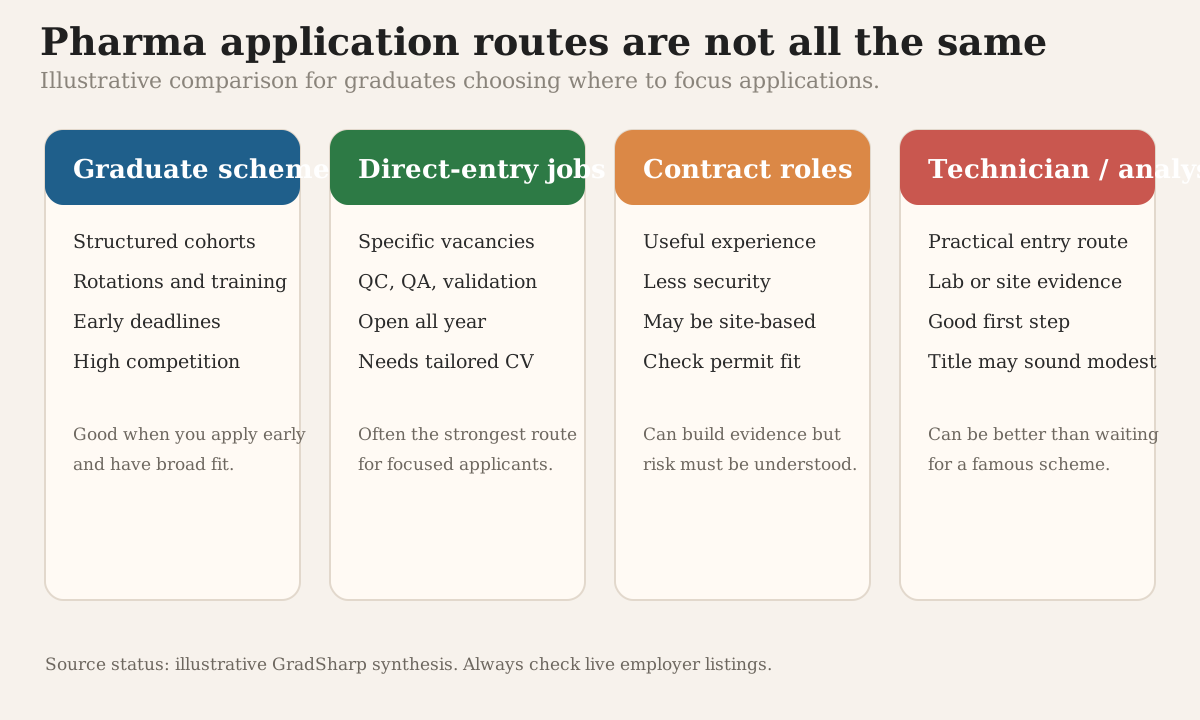
Pharma graduate schemes vs direct-entry jobs
Many students search for “pharma graduate schemes Ireland,” but graduate schemes are only one route into the sector.
Graduate schemes
Graduate schemes are usually structured programmes with rotations, formal training and annual recruitment cycles. They can be excellent, but they are often competitive and deadline-driven.
They may suit candidates who:
- are still at university or recently graduated
- can apply early in the academic year
- have strong academics and relevant evidence
- are comfortable with structured selection stages
- can relocate if required
The risk is that students rely only on graduate schemes and ignore other entry points.
Direct-entry graduate jobs
Direct-entry roles are specific vacancies rather than broad graduate programmes. They may have titles such as QC analyst, QA associate, validation engineer, process scientist or manufacturing technician.
These roles can be a strong route because they allow you to target a specific role family. The CV needs to be more tailored, because the employer is hiring for a real job rather than a general graduate cohort.
Contract roles
Contract roles are common in parts of the pharma ecosystem. They can help graduates gain experience, but they may be less secure than permanent roles.
They may be useful if:
- you need Irish industry experience
- the role gives relevant technical exposure
- the contract length fits your work permission
- you understand the risk before accepting
International students should be particularly careful with contract roles because longer-term permit support may be less clear.
Technician and analyst entry routes
Some graduates overlook technician or analyst roles because they sound less prestigious than “graduate scheme.” That can be a mistake.
A QC analyst, lab analyst, manufacturing technician or QA support role can build valuable experience and make you more competitive for future roles.
The right question is not “Does the job title sound impressive?” It is “Will this role give me relevant pharma evidence?”
How to position your CV for Irish pharma roles
A generic science CV will usually underperform.
Your CV should make your pharma fit obvious in the first third of the page. Recruiters should quickly see your target role, relevant technical evidence and proof that you understand regulated work.
Weak CV profile
Biotechnology graduate seeking an opportunity in the pharmaceutical industry. Hard-working, motivated and passionate about science.
This is too generic. It could be sent to any employer and does not show enough evidence.
Stronger CV profile
Biotechnology MSc graduate with project experience in aseptic technique, microbial testing and data interpretation. Comfortable following SOP-style procedures, recording results accurately and working in controlled lab environments. Targeting QC analyst, QA associate and bioprocessing support roles in Ireland.
This version is stronger because it names relevant techniques, shows work style and targets realistic role families.
What to include near the top of the CV
Consider adding a short “Relevant technical evidence” section with bullets such as:
- Aseptic technique and microbial testing experience from MSc project
- Data analysis and interpretation using Excel and statistical methods
- Experience preparing structured lab reports and documenting results
- Understanding of GMP principles from university module or short course
- Final-year project involving analytical testing and quality-focused reporting
Only include what is true. Do not claim GMP experience if you only watched a short video. Use cautious wording such as “GMP awareness” if you have studied the concept but not worked in a GMP environment.
Common mistakes graduates make when applying to pharma jobs
Applying only to famous companies
Large pharma employers are attractive, but they are also competitive. Build a broader employer list that includes manufacturers, biopharma sites, contract development and manufacturing organisations, testing labs, supply chain employers and relevant life sciences companies.
Using the same CV for QC, QA and regulatory roles
These roles are different. A QC CV should highlight lab accuracy and analytical methods. A QA CV should highlight documentation, process discipline and quality systems. A regulatory CV should highlight written communication, attention to detail and understanding of controlled information.
Ignoring manufacturing roles
Some graduates want lab roles only. That is understandable, but manufacturing and process roles can offer strong long-term careers, especially in biopharma.
Waiting until after graduation
Many graduate schemes open before students finish their course. Direct-entry jobs appear throughout the year, but you still need a prepared CV, employer list and application examples before the pressure starts.
Assuming a master’s degree is enough
A master’s can help, especially if it includes relevant technical or project evidence. But a master’s without practical examples may not beat a bachelor’s graduate with placement experience.
Not checking work permission early
International students should check permission and permit fit before investing time in long recruitment processes. A job advert does not automatically mean employment permit support is available.
Applying to locations they cannot realistically reach
Many pharma roles are site-based. If you cannot commute or relocate, the application may not be realistic.
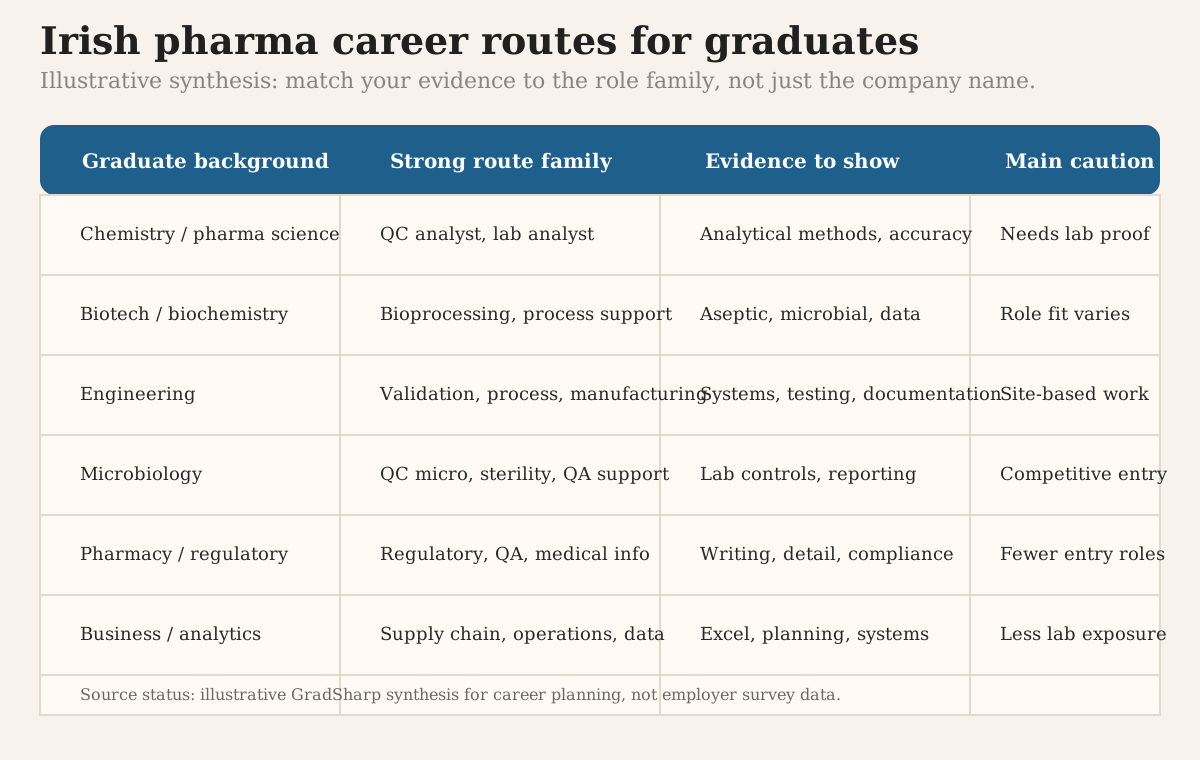
Suggested table: Irish pharma career routes for graduates
| Career route | Good fit for | Useful evidence | Main caution |
|---|---|---|---|
| QC analyst | Chemistry, microbiology, biotechnology, pharmaceutical science | Lab methods, accuracy, data recording, analytical techniques | Competitive if you have no lab evidence |
| QA associate | Science graduates with strong documentation skills | SOP awareness, report writing, quality mindset, attention to detail | Less lab-based than some students expect |
| Validation engineer | Engineering, process, technical STEM backgrounds | Process thinking, documentation, testing, problem solving | May require stronger engineering or systems evidence |
| Manufacturing technician | STEM graduates open to site-based work | Procedure-following, safety, manufacturing interest, shift flexibility | Shift work and location may matter |
| Process scientist | Biotech, bioprocessing, chemical engineering | Upstream/downstream knowledge, process optimisation, data | Often needs strong technical fit |
| Regulatory assistant | Life sciences plus strong writing | Detail, document control, communication, regulatory awareness | Fewer entry roles than broad science applicants expect |
| Supply chain graduate | Business, STEM or analytics backgrounds | Excel, planning, systems thinking, stakeholder communication | Less suitable if you only want lab work |
Source status: illustrative synthesis for career planning, not survey data.
What matters more than graduates think
Role fit matters more than company fame
A relevant QC role at a less famous company may build a better career foundation than repeated rejections from a famous multinational.
Documentation matters more than “passion”
Pharma is a regulated industry. Employers need people who can follow procedures, document accurately and work safely.
Location flexibility matters
Being open to Cork, Waterford, Limerick, Kildare or other sites can improve your opportunity set.
Work permission clarity matters
For international students, a strong CV is not enough. You also need a realistic understanding of Stamp 1G, employment permit rules and employer willingness to support your situation.
What matters less than graduates think
The exact university name
University reputation can help at the margins, but pharma employers usually care more about degree relevance, skills, experience, role fit and evidence.
Having the perfect degree title
A biotechnology graduate, chemistry graduate, engineering graduate and pharmaceutical science graduate may all be suitable for different routes. The key is not the title alone; it is the match between your evidence and the job.
Applying to hundreds of roles
Volume helps only if applications are targeted. A smaller number of well-matched applications is usually better than sending the same CV everywhere.
Checklist before applying to pharma jobs in Ireland
Before applying, check:
- Have I chosen a specific role family, such as QC, QA, validation, manufacturing, process, regulatory or supply chain?
- Does my CV show relevant technical evidence in the top third?
- Have I included lab, project, placement, internship or documentation examples?
- Have I removed generic phrases such as “passionate about science” unless backed by evidence?
- Do I understand whether the role is site-based, shift-based or location-specific?
- Have I checked whether I can commute or relocate?
- If I am an international student, have I checked my Stamp 1G timeline?
- Have I checked whether the role may fit employment permit rules if I need longer-term permission?
- Have I prepared examples for accuracy, teamwork, problem solving and following procedures?
- Have I applied to a mix of graduate schemes, direct-entry roles and realistic entry points?
FAQ
Is the pharma industry in Ireland good for graduates?
Yes, it can be a strong route, especially for graduates in science, engineering, biotechnology, chemistry, pharmacy, quality, manufacturing, supply chain and data-related fields. However, entry-level roles are competitive. Graduates need to show practical evidence, not just interest in the industry.
What degree do I need to work in pharma in Ireland?
Common backgrounds include biotechnology, chemistry, biochemistry, pharmaceutical science, microbiology, chemical engineering, process engineering, pharmacy, data analytics and supply chain. The right degree depends on the role. QC, QA, validation, process, regulatory and commercial roles can screen for different evidence.
Are there pharma graduate schemes in Ireland?
Yes, some pharma and life sciences employers run graduate or student programmes, but availability changes by employer and intake. Applicants should check live employer careers pages rather than relying on old programme names or third-party lists.
Can international students get pharma jobs in Ireland?
International students can apply for pharma jobs in Ireland, but they should check their work permission, Stamp 1G timing and whether the employer can support longer-term employment permission if needed. A strong pharma sector does not mean every role will support an employment permit.
Does Stamp 1G mean I can stay in Ireland permanently?
No. Stamp 1G is a graduate permission that allows eligible graduates to remain in Ireland for a limited period under the Third Level Graduate Programme, subject to conditions. It is not permanent residence and it is not the same as an employment permit. Always check current official immigration guidance.
Where are most pharma jobs in Ireland?
Pharma and biopharma roles are spread across locations including Cork, Dublin, Limerick, Waterford, Galway and other regional sites. Some roles are site-based, shift-based or outside city centres, so commuting and housing costs matter.
What is the easiest way to enter pharma as a graduate?
There is no guaranteed easy route, but realistic entry points often include QC analyst, QA associate, manufacturing technician, process support, validation support, lab analyst and supply chain roles. Graduates with placement, lab, GMP, documentation or manufacturing evidence are usually better positioned.
Do pharma companies in Ireland sponsor employment permits?
Some employers may support employment permits for some roles, but it varies by employer, job, salary, occupation and business need. International graduates should not assume sponsorship is available just because the company is large. Check the advert, ask early and use official guidance.
Should I do a master’s to get a pharma job in Ireland?
A master’s can help if it gives relevant technical, lab, regulatory, data or bioprocessing evidence. It is less useful if it only adds another qualification without practical experience. For many roles, targeted experience and a stronger CV may matter more than another degree.
Are pharma jobs in Ireland mostly lab-based?
No. Many roles are lab-based, but the sector also includes manufacturing, quality assurance, validation, regulatory affairs, supply chain, engineering, data, commercial and project roles.
Build an Irish pharma target list
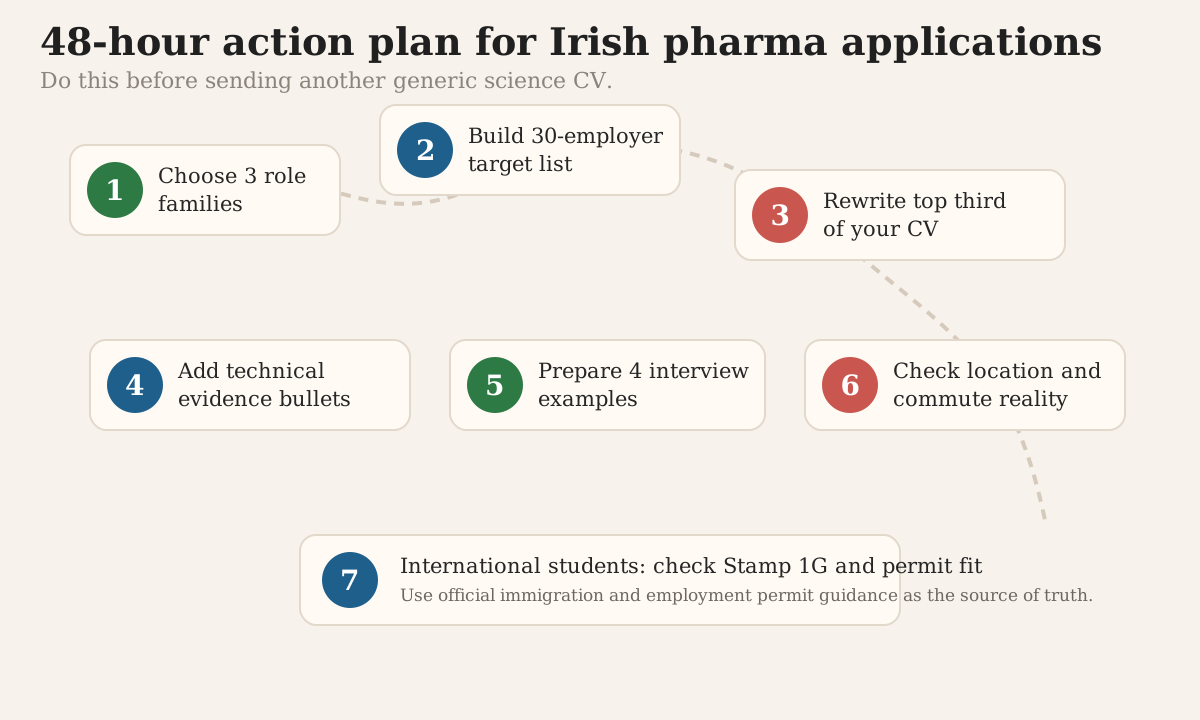
If you want to work in the pharma industry in Ireland, do not start by applying randomly.
Start with this:
- Choose three target role families: QC, QA, validation, manufacturing, process, regulatory or supply chain.
- Build a list of at least 30 pharma, biopharma and life sciences employers with Irish sites.
- Rewrite the top third of your CV for one role family.
- Add a short “Relevant technical evidence” section.
- Prepare four examples: accuracy, teamwork, problem solving and following procedures.
- Check locations before applying.
- If you are an international student, check your Stamp 1G timeline and whether longer-term employment permission may be needed.
- Apply to a mix of graduate schemes, direct-entry roles, analyst roles and technician roles.
Ireland’s pharma industry is strong, but the best graduate applications are not generic. They show the employer exactly where the candidate fits, what evidence they bring and whether they understand the reality of working in a regulated industry.