529 Plans and European Universities: What US Families Should Check Before Using the Money
A practical 529 checklist for US families asking whether 529 funds can be used for foreign universities, study abroad, housing, travel and records.
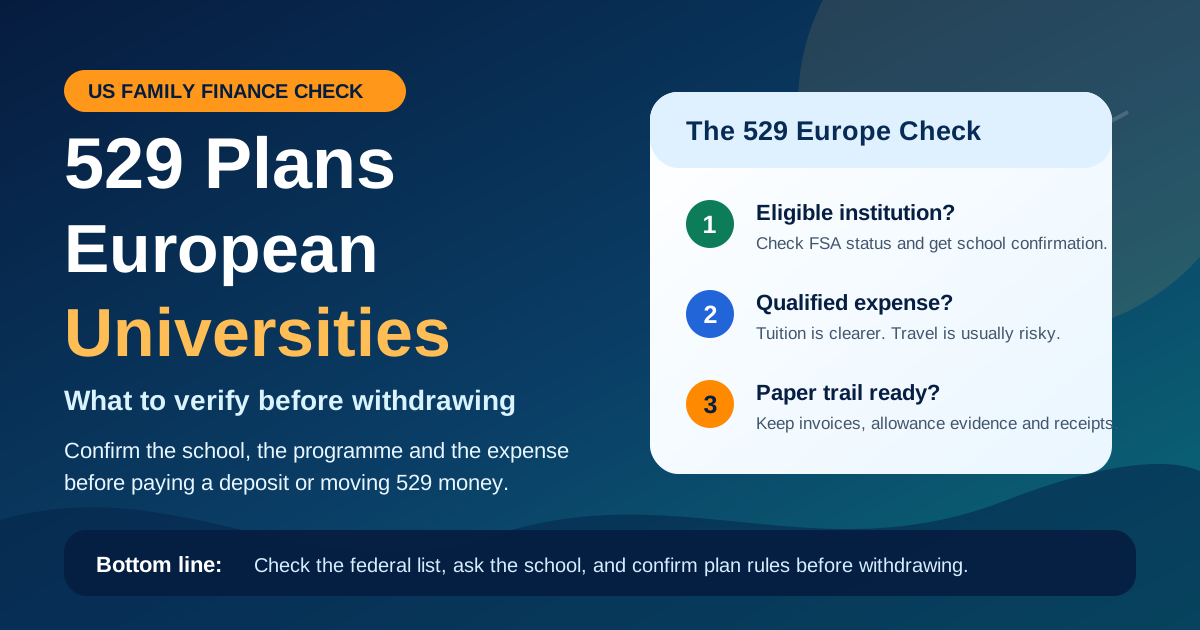
American families often ask the 529 question too late.
They compare a European university’s tuition with US college prices, decide the numbers look attractive, and only then ask: “Can we use the 529?” The better question is earlier and stricter: is this exact university, programme and expense safe for a qualified 529 withdrawal?
The answer is not a blanket yes. A 529 plan can sometimes be used for a European university, but only when the school fits the US “eligible educational institution” rule and the withdrawal is used for qualified education expenses. A beautiful campus, an English-taught degree and a low tuition page do not settle the tax question.
This is a planning guide, not tax advice. Use it before paying a deposit, accepting an offer or moving money out of the account.
Related GradSharp reading: start with the broader American students studying in Europe checklist if you are still choosing a degree, use the European bachelor’s versus US college guide if this is an undergraduate decision, and read the FAFSA foreign-school checklist before assuming US federal loans and 529 funds work the same way.
The short answer for 529 withdrawals
A US family may be able to use 529 funds for a European university if the institution is an eligible educational institution under IRS rules. IRS Publication 970 says an eligible postsecondary school includes certain institutions outside the United States that are eligible to participate in a US Department of Education student aid programme. The institution should also be able to tell families whether it is an eligible educational institution.
That is the first gate. The second gate is the expense. Tuition and required fees are usually easier to document. Required books, supplies and equipment may qualify. Room and board is more conditional. Flights, tourism, family visits and general lifestyle costs are where families get into trouble.
| Family question | Safer answer |
|---|---|
| Can a 529 be used in Europe? | Sometimes, if the school is eligible and the expense is qualified. |
| Does a foreign university name on a website prove eligibility? | No. Check the federal list and ask the school. |
| Does “deferment only” mean the same thing as eligible for new US aid? | No. Treat it as a warning sign and ask before relying on it. |
| Can 529 funds pay for flights to Europe? | Do not assume so. Travel is not listed in the core IRS qualified higher education expenses for QTPs. |
| Should families withdraw before the bill arrives? | Usually no. Build the paper trail first. |
The 529 mistake families make
The common mistake is treating a 529 account like a general “college abroad fund”.
That is understandable. Parents have saved for years, the student is going to university, and the expense feels educational. But 529 plans are tax-advantaged accounts with rules. The SEC’s Investor.gov 529 bulletin describes 529 plans as tax-advantaged savings plans sponsored by states, state agencies or educational institutions. It also warns that federal and state laws can change and that tax benefits vary by state and by plan.
For a European degree, three questions hide inside one casual “Can we use the 529?”
- Is the institution eligible?
- Is the expense qualified?
- Can we document the withdrawal cleanly if the IRS, state tax authority or plan administrator asks later?
The answer has to be yes, yes and yes.
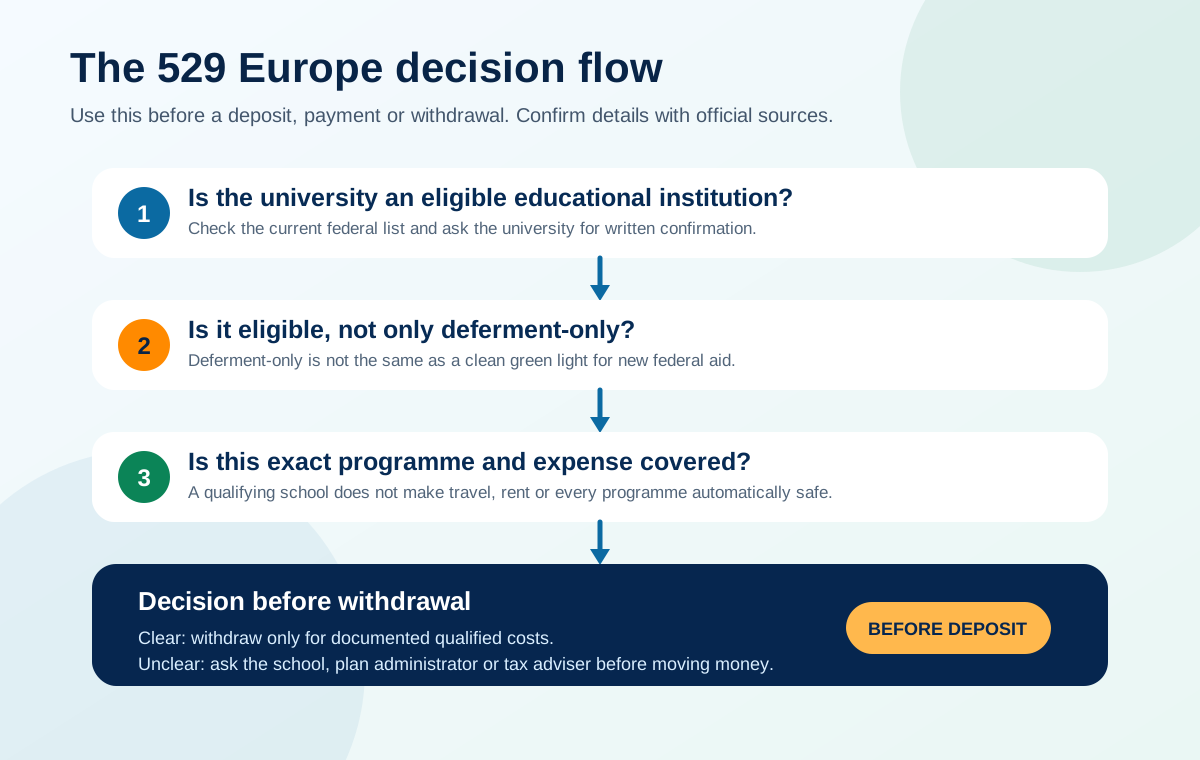
Step 1: Check the school, not the country
Do not ask whether “France”, “Ireland” or “Germany” accepts 529 plans. Ask whether the specific institution meets the US eligible-institution rule.
IRS Publication 970 says an eligible educational institution is generally a college, university, vocational school or other postsecondary institution eligible to participate in a US Department of Education student aid programme. It also says certain educational institutions outside the United States are included if they are eligible to participate in a US Department of Education student aid programme.
That means a country can contain both good options and unsafe assumptions. One university may appear on a relevant US federal list; another may not. A university may have a familiar brand but not be eligible for the purpose your family cares about.
For US families, the practical check is:
- Search the current federal school code or international schools list.
- Look for the exact university name, not just the city or group brand.
- Note the status shown.
- Ask the university’s financial aid or international office to confirm its US aid/529 status in writing.
- Ask your 529 plan administrator whether the school and planned expense fit the plan’s rules.
Federal Student Aid says the Federal School Code List is a searchable document updated on the first of February, May, August and November each year. That matters because a screenshot from an old forum or old spreadsheet is not enough for a family making a current withdrawal.
Step 2: Understand “eligible” vs “deferment only”
The foreign-school list can include different statuses. This is where families often misread the signal.
Federal Student Aid explains that “eligible” means US students may borrow through US federal student aid programmes while enrolled in an eligible programme at an eligible foreign university or college. “Deferment Only” means US students may defer payments on existing federal student loan accounts while enrolled in an eligible programme, but may not take out federal student loans for enrollment at that deferment-only institution.
For FAFSA and federal-loan planning, that distinction is direct. For 529 planning, it is still a serious warning. A “deferment only” entry is not a clean green light for new federal aid, and families should not treat it as a tax ruling for a 529 withdrawal.
A safer approach is to ask three written questions:
- Is this university currently treated as an eligible educational institution for US 529/QTP purposes?
- Is this exact degree programme eligible, not only the institution in general?
- Can the university provide the cost-of-attendance or room-and-board allowance needed for 529 record keeping?
If the school cannot answer, pause. A deposit is easier to delay than a tax problem is to unwind.
Step 3: Check the expense category
A qualifying school does not turn every overseas cost into a qualified expense.
For QTPs, IRS Publication 970 lists qualified higher education expenses such as tuition and fees required for enrollment or attendance, required books, supplies and equipment, special-needs services connected with enrollment or attendance, and certain room and board costs for students enrolled at least half-time. It also includes computer or peripheral equipment, software, internet access and related services where used primarily by the beneficiary during enrollment.
The room-and-board rule is especially important abroad. IRS Publication 970 says room and board qualifies only up to the greater of the school-determined allowance included in cost of attendance for that academic period and living arrangement, or the actual amount charged if the student lives in housing owned or operated by the school.
That means a private apartment in Amsterdam, Dublin, Berlin or Paris is not simply “qualified” because the student needs somewhere to live. You need the school’s cost-of-attendance allowance, the student’s enrollment status and clear evidence of what was paid.
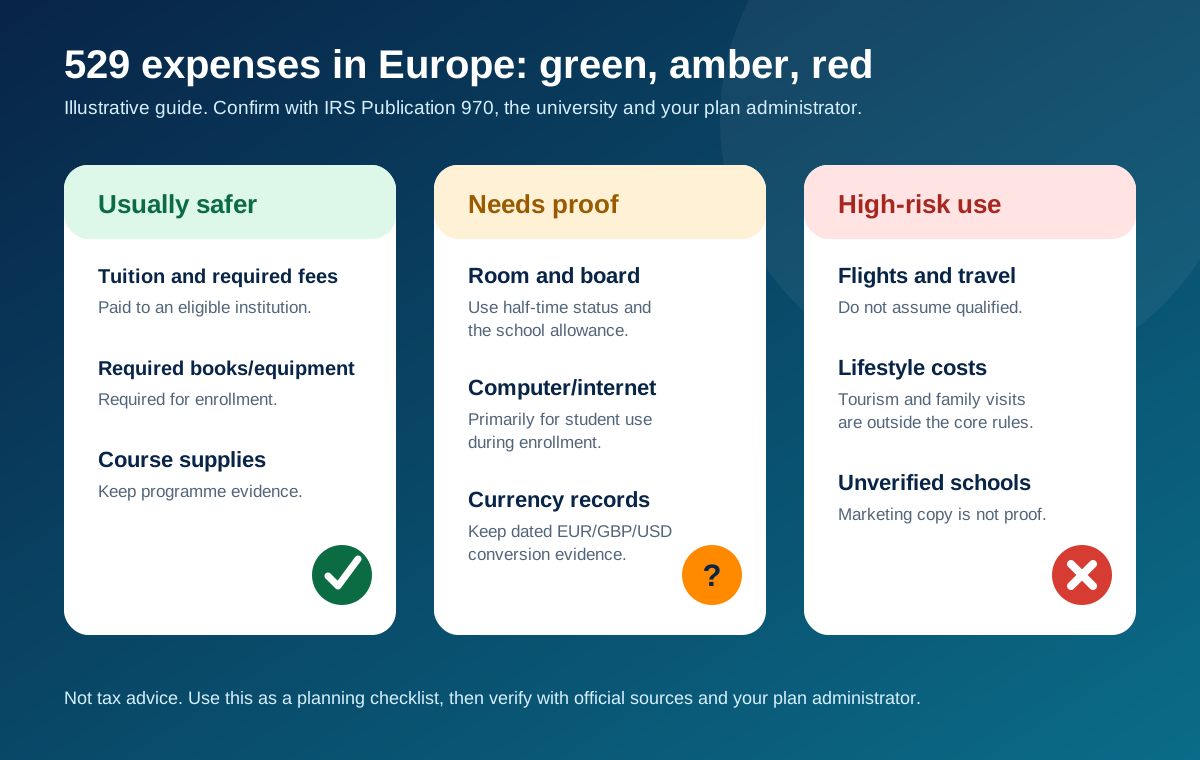
What usually belongs outside the 529 withdrawal
Families should be especially careful with costs that feel necessary but are not clearly qualified under the 529 higher-education expense rules.
Flights are the classic example. A student cannot study in Europe without getting there, but travel is not the same as tuition, required fees, required books, required equipment or qualified room and board. The same caution applies to visa trips, family visits, tourism, restaurants, local entertainment, clothing, luggage and most lifestyle spending.
Health insurance also needs checking. Some European universities require insurance or include it in an official fee; others leave it to the student. Do not assume. Ask whether the charge is a required enrollment cost billed by the institution, and confirm treatment with the plan administrator or tax professional.
The practical rule is blunt: if you cannot tie the expense to an IRS category and a document, do not fund it from the 529 without advice.
Can you use a 529 for study abroad?
There is another trap: study abroad through a US college.
Federal Student Aid says that for a short-term or study-abroad programme sponsored by a domestic US school, federal student aid is processed by the student’s home institution in the United States. It also says a foreign institution is not authorised to certify loans or deferments for US study-abroad students who only plan to attend for a semester or a one-year experience that transfers credits back to a US degree.
For 529 planning, identify who the student is actually enrolled with. A US-home-college semester abroad, a full European degree and a third-party provider programme can have different billing and documentation trails.
| Student route | Who usually controls the bill? | 529 question to ask first |
|---|---|---|
| Full degree at a foreign university | The foreign university | Is this institution an eligible educational institution, and are these expenses qualified? |
| Semester abroad through a US college | The US home institution | Does the US college treat the programme costs as qualified expenses under its billing and cost-of-attendance rules? |
| Summer programme or third-party provider | It depends on the sponsor and billing route | Is the student enrolled through an eligible institution, or only buying a travel-style programme? |
| Housing abroad | University housing, private landlord or provider | Is there a school cost-of-attendance allowance or university-owned housing charge that supports the room-and-board amount? |
| Flights, visas and insurance | Airlines, government offices or insurers | Do not assume. Ask whether the charge fits a qualified-expense category before using 529 funds. |
The before-withdrawal document pack
A clean 529 withdrawal should not rely on memory. Build the file before moving the money.
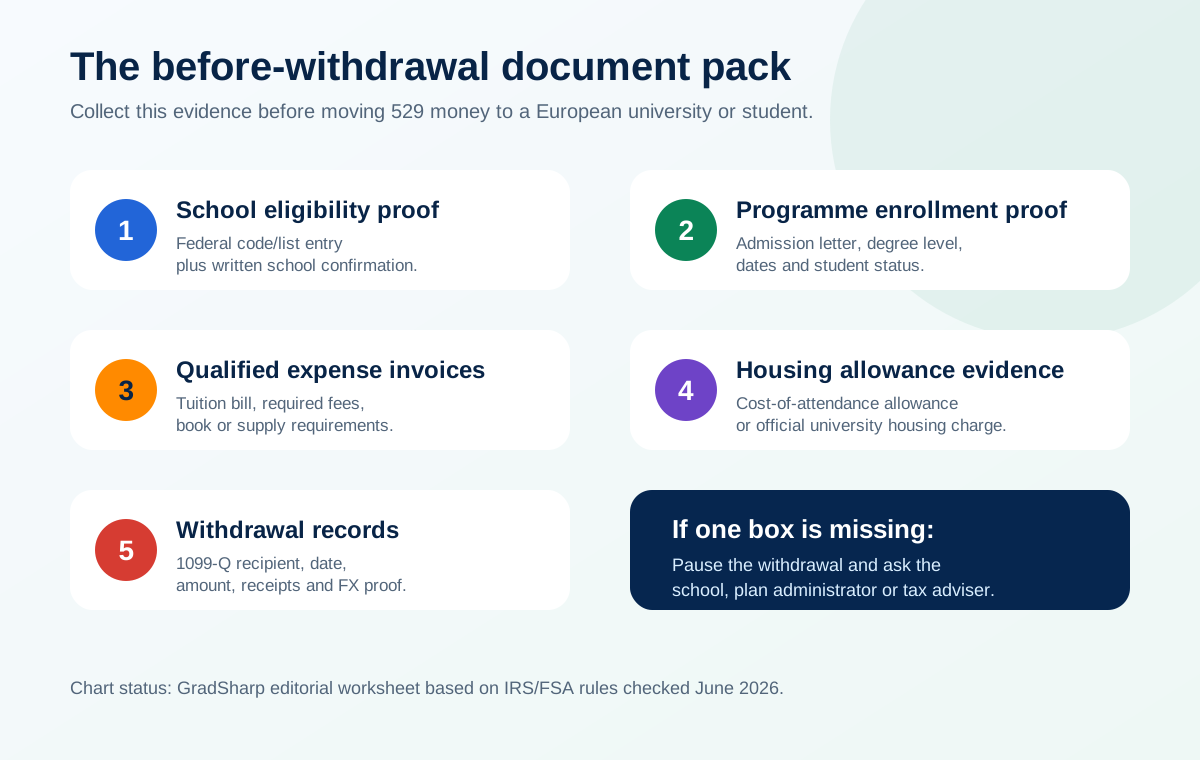
Keep these items together:
| Document | Why it matters |
|---|---|
| Federal school-code/list evidence | Shows why the family believed the institution was eligible. |
| University written confirmation | Creates a direct record from the school, not a blog or agent. |
| Offer/admission letter | Shows the programme, degree level and start date. |
| Enrollment proof | Supports the student status and academic period. |
| Tuition and fee invoice | Links the withdrawal to required enrollment charges. |
| Required-books/equipment evidence | Shows the item was required, not just useful. |
| Cost-of-attendance or housing allowance | Important for room-and-board limits. |
| Receipts and payment confirmations | Connects the 529 withdrawal to the expense actually paid. |
| Exchange-rate snapshot | Helps reconcile euro, pound or kroner payments with US-dollar withdrawals. |
| 1099-Q records | Needed for tax reporting and allocation if questioned. |
This is where a tax professional can be most useful: not just quoting the rule, but supporting the numbers used on the return.
Three real-family scenarios
| Scenario | Main risk | Safer move |
|---|---|---|
| Full UK or Irish degree with a tuition invoice | Assuming housing is covered because tuition is eligible | Keep the tuition invoice, enrollment proof, payment record and separate evidence for any housing withdrawal. |
| Dutch or German degree with private rent | Over-withdrawing because tuition is low but housing is high | Ask for the university’s room-and-board allowance before using 529 funds for rent. |
| One semester in Europe through a US college | Asking the foreign host when the US home institution controls billing | Start with the US college’s financial aid and billing office, then document the programme costs. |
These examples are not tax rulings. They show the pattern: the safer case has a clear school, a clear academic period, a clear expense and a clean document trail.
What matters more than families think
| Issue | Why it matters |
|---|---|
| Status wording | ”Eligible”, “deferment only”, “partner university”, “study centre” and “campus” do not mean the same thing. |
| Housing evidence | Private rent abroad is often the largest grey area. Ask for the official allowance before signing a lease if 529 funds are involved. |
| Currency records | Keep screenshots or bank records showing the dollar value of euro, pound or kroner payments. |
| Coordination with other aid | Scholarships, education credits and other tax-free assistance can affect how much of a 529 distribution is tax-free. |
What matters less: the country label, the advertised tuition headline, and the student’s confidence that “lots of Americans go there.” The IRS looks at eligible institutions, qualified expenses and records, not vibes.
Email template to send before paying a deposit
Use this before the deposit deadline, not after.
Subject: US 529 plan / eligible educational institution confirmation

Hello,

My family is considering using funds from a US 529 qualified tuition programme for this degree.

Could you please confirm:

1. Whether [University Name] is currently an eligible educational institution for US Department of Education / US federal student aid purposes.
2. Whether [Programme Name], starting [Month Year], is an eligible degree programme for US students.
3. Whether the university has a Federal School Code or OPEID we should use for verification.
4. Whether the university can provide a cost-of-attendance or room-and-board allowance for this programme and academic year.
5. Which office should our 529 plan administrator contact if they need written confirmation.

Thank you,
[Name]
If the reply is vague, ask again. “We welcome US students” is not the answer. “Here is our federal school code/OPEID, status and office contact” is more useful.
Next 48 hours
First, make a short list of the European universities where the student is seriously considering applying or depositing.
Second, check each school against the current federal school code or international schools list. Save a dated PDF or screenshot for your records.
Third, email each university using the template above. Ask specifically about 529/QTP and eligible educational institution status.
Fourth, ask your 529 plan administrator what documentation they want before a foreign-school withdrawal. Do not assume every plan handles foreign schools in the same way.
Fifth, divide the budget into four columns: clearly qualified, likely qualified with documentation, uncertain, and do not use 529 without advice.
Finally, do not withdraw early just to “have the cash ready”. Wait until the bill, enrollment period and qualified-expense evidence are clear.
FAQ
Can a 529 plan be used at a European university?
Sometimes. IRS Publication 970 says certain institutions outside the United States can count as eligible educational institutions if they are eligible to participate in a US Department of Education student aid programme. Confirm the school, programme and expense.
Does a 529 cover study abroad?
Sometimes, but the sponsor and billing route matter. A semester abroad through a US college may be documented by the US home institution, while a full degree abroad depends on the foreign university’s eligible-institution status and the qualified-expense rules.
Can you use a 529 for a foreign university if the programme is short?
Do not assume so. A short summer programme, third-party provider course or travel-heavy experience may have a different enrollment and billing trail from a full degree. Ask who the student is enrolled with and whether the expense fits a qualified category before withdrawing.
Is every European university with American students 529 eligible?
No. American enrollment does not prove US tax eligibility.
Can 529 funds pay for flights to Europe?
Do not assume so. Travel is not one of the core QTP qualified higher education expense categories listed in IRS Publication 970.
Can 529 funds pay for rent in Europe?
Possibly, but only within the room-and-board rules. For students enrolled at least half-time, the qualifying amount is limited by the school allowance or the actual charge for university-owned or operated housing.
What if the school is listed as deferment only?
Pause and ask. Federal Student Aid says deferment-only status lets students defer existing federal loan payments but does not allow new federal student loans for enrollment at that institution.
Is this tax advice?
No. It is a planning checklist based on official public guidance. Families should verify details with the school, plan administrator and a qualified tax professional.
Source-checked notes
Checked on 2026-06-30.
- IRS Publication 970, Tax Benefits for Education — checked for QTP definition, eligible educational institution rules, qualified higher education expense categories, room-and-board limits, taxability and coordination issues.
- IRS 529 Plans Q&A and IRS eligible educational institution page — checked for eligible institution wording.
- Federal Student Aid / FSA Partner Connect foreign-school student FAQ — checked for eligible vs deferment-only status, Direct Loan limits, grant exclusion and study-abroad treatment.
- Federal Student Aid Federal School Code List page — checked for update cycle and current list status.
- SEC Investor.gov 529 Investor Bulletin — checked for state-plan variation, fees, tax-benefit cautions and penalty overview.
Future applicants and families should confirm live IRS, Federal Student Aid, university and 529-plan information before making a withdrawal.