Can Americans Use FAFSA for a Degree in Europe? The Foreign School Check Families Miss
A practical FAFSA checklist for American students considering a European degree, including eligible schools, deferment-only status and programme checks.
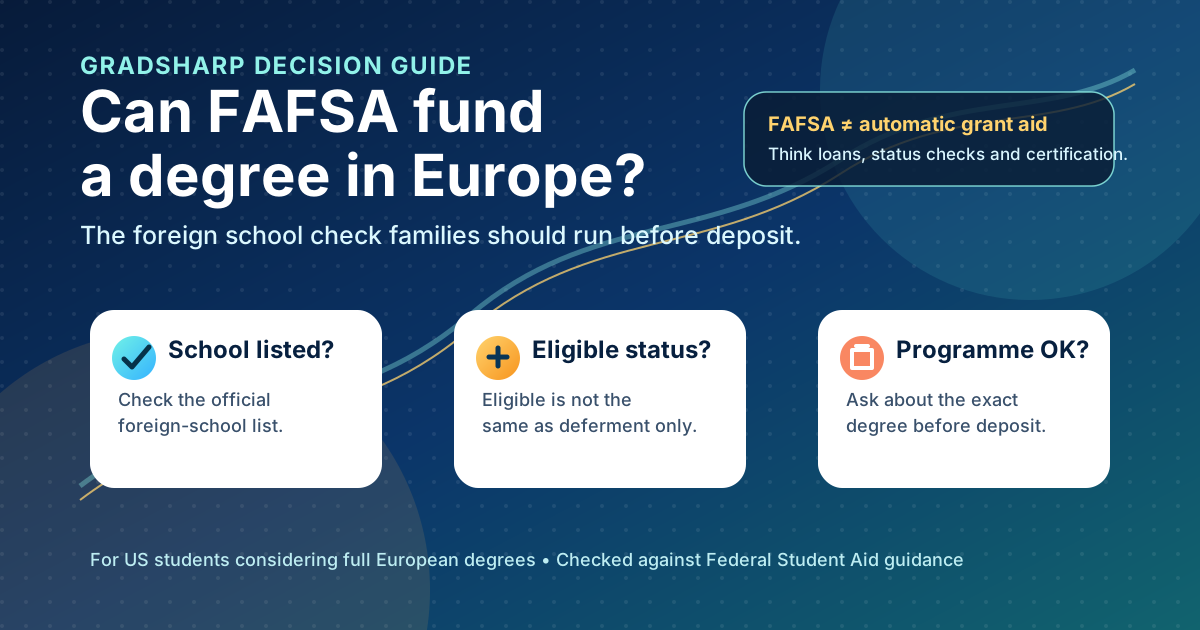
American families often ask the FAFSA question too late.
They find a European university, compare the tuition with US college prices and assume the Free Application for Federal Student Aid will work in roughly the same way. Then the deposit deadline arrives and the answer is not “yes” or “no”. It is: the school, status and exact programme all matter.
This article is not financial aid advice. It is a practical pre-deposit check for US citizens and eligible noncitizens considering a full degree in Europe.
Related GradSharp reading: use the broader American students studying in Europe checklist for the whole degree decision, the European bachelor’s versus US college guide for undergraduate family trade-offs, and the 529 plans and European universities checklist if your family is also planning tax-advantaged withdrawals.
The federal-aid answer in one sentence
Yes, some Americans can use the FAFSA process to access US federal loans for a degree at a European university. But FAFSA is the application form, not a guarantee of funding.
Federal Student Aid says students seeking federal aid at a foreign school must be enrolled as regular students in an eligible programme at an eligible foreign institution, normally at least half-time. It also says “eligible” and “deferment only” mean different things: eligible schools may certify new federal loans for eligible students in eligible programmes, while deferment-only schools may allow existing federal loan payments to be deferred but do not allow new federal loans for that school. Federal Student Aid foreign-school FAQ
That is the mistake families miss.
What FAFSA actually does for a foreign degree
FAFSA does not make a European degree “covered”. It starts the federal aid process.
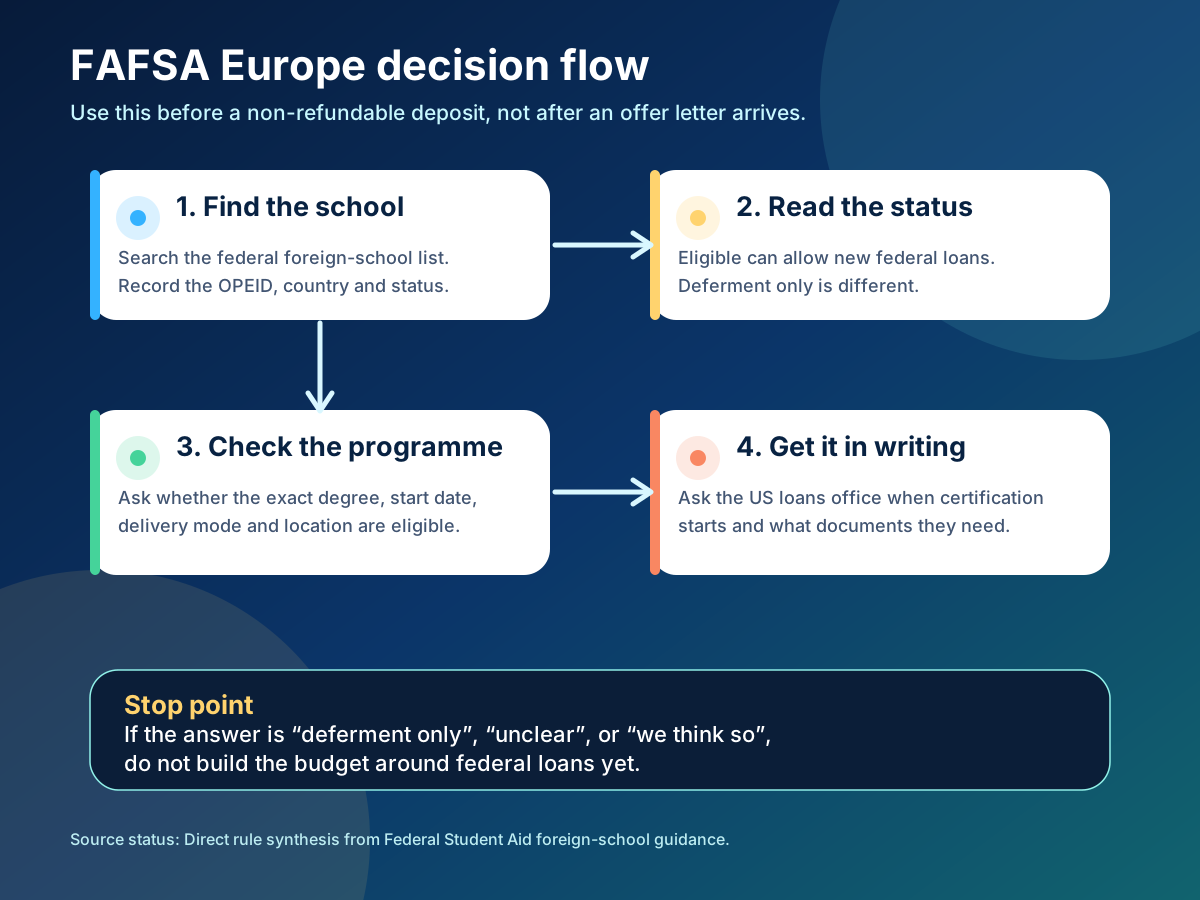
For a foreign school, the practical chain is:
- The student completes the FAFSA.
- The school must be eligible to participate in the US federal student loan system.
- The student must be eligible.
- The exact programme must be eligible.
- The foreign university certifies the loan amount within its cost-of-attendance process.
That means the university’s US financial aid office matters. A generic admissions officer may not be the right person. You need the person or team that handles US Federal Direct Loans.
Federal Student Aid says US students may receive Direct Loan funding at foreign schools, including subsidised and unsubsidised Stafford loans and PLUS loans, but students attending foreign schools are not eligible for federal grant programmes such as the Pell Grant or TEACH Grant. Federal Student Aid foreign-school FAQ
So the honest wording is:
FAFSA may help you borrow for an eligible European degree. It usually will not turn that degree into grant-funded aid.
That difference matters if your US college plan assumed Pell Grants, work-study, state grants or a mixed aid package.
The foreign-school check: three gates before you pay a deposit
The safest approach is to treat FAFSA abroad as a three-gate check.
Gate 1: Is the school on the federal foreign-school list?
Start with the official StudentAid.gov international schools list or federal school search. The StudentAid.gov list shows an OPEID, school name, city, country and status.
Do not rely only on a university’s marketing page saying “US loans accepted”. It may be accurate, but you still need to confirm the current federal status and the exact programme.
A school on the list is a starting point. It is not the finish line.
Gate 2: Is it “eligible” or “deferment only”?
This is the most important distinction.
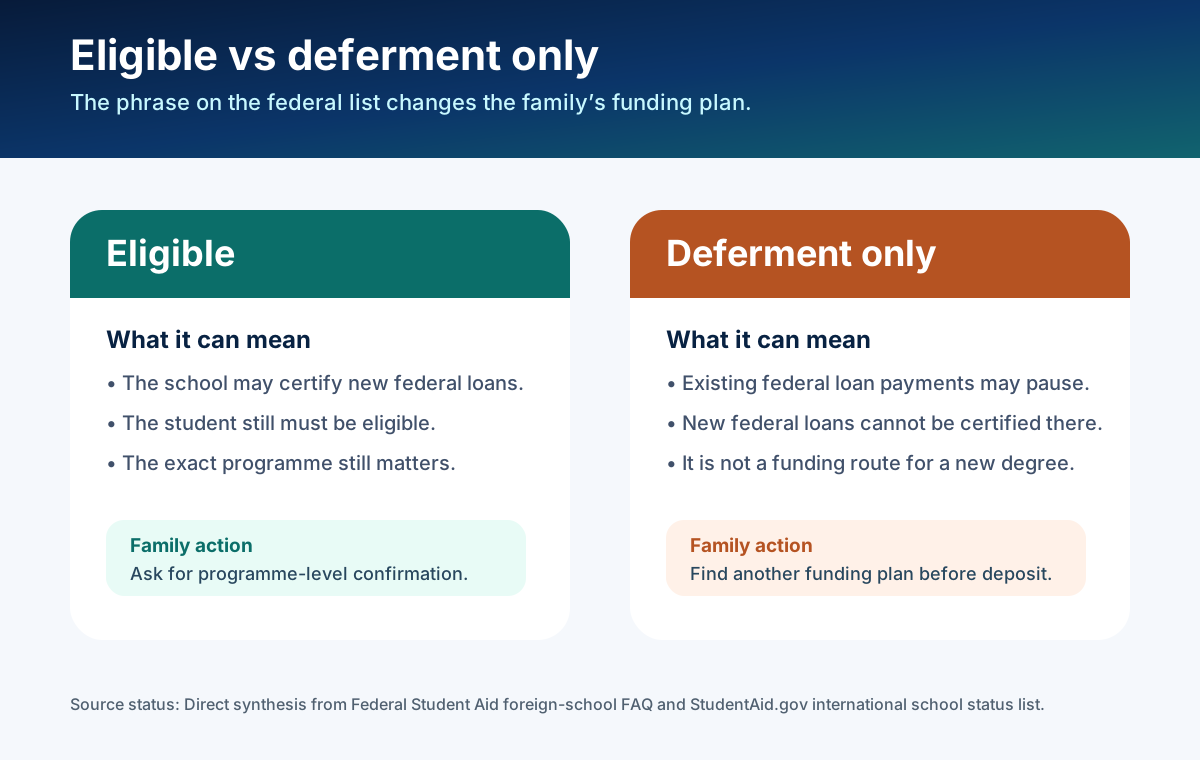
| Status | What families often think | What it means in practice |
|---|---|---|
| Eligible | “FAFSA works here.” | The school may certify federal loans for eligible US students in eligible programmes. You still need programme confirmation. |
| Deferment only | “FAFSA works but maybe differently.” | Existing US federal loan payments may be deferred while enrolled, but you cannot take out new federal loans for that school. |
| Not listed / unclear | “Maybe I can add the school on FAFSA.” | Do not assume. Ask the university’s US loans office before deposit. |
If a school is deferment only, it may be useful for someone who already has US federal loans and wants to pause repayment while studying. It is not the same as funding a new European degree.
Gate 3: Is this exact programme eligible?
This is where families can still get caught.
Federal Student Aid says a foreign institution may approve federal loans or deferments only for eligible US students enrolled in an educational programme that is at least one year long and leads to a certificate, diploma or full degree at undergraduate or graduate level. It also says a programme offered by a foreign school is not eligible for federal student aid if it is provided by correspondence or distance education in whole or in part. Federal Student Aid foreign-school FAQ
That means “the university is eligible” does not automatically mean:
- this pathway programme is eligible;
- this online or blended programme is eligible;
- this foundation year is eligible;
- this joint degree in another country is eligible;
- this short study-abroad semester is eligible;
- this private partner campus is eligible.
Ask in writing. Use the exact programme name, degree level and start date.
Study abroad is not the same as direct European enrolment
A semester in Europe through a US college is usually processed through the US home institution. A full European degree is different.
Federal Student Aid says that for short-term study abroad sponsored by a domestic US school, federal aid is processed by the US home institution. It also says a foreign institution is not authorised to certify loans for US study-abroad students who only attend for a semester or one-year study-abroad experience to earn transfer credits into a US degree. Federal Student Aid foreign-school FAQ
Separate the three cases before you budget:
| Plan | Who usually handles federal aid? | Main risk |
|---|---|---|
| US college semester abroad | US home institution | Credit transfer and programme cost |
| Exchange year through US college | US home institution | Home-school aid rules and extra fees |
| Full European degree | European university if eligible | School status, programme eligibility and loan certification |
This article is about the third case: enrolling directly at a European university for the degree.
What aid can travel abroad?
The broad answer: federal loans may be possible; federal grants usually are not.
Use this as a plain-English map:
| Aid type | Can it usually be used at eligible foreign schools? | What to check |
|---|---|---|
| Direct Subsidised Loan | May be possible for eligible undergraduate students | Need, level, annual loan limit and school certification |
| Direct Unsubsidised Loan | May be possible | Annual loan limit and school certification |
| Parent PLUS Loan | May be possible for eligible parents | Credit check, cost of attendance and parent repayment risk |
| Grad PLUS Loan | May be possible for eligible graduate/professional students | Credit check, school certification and current federal loan rules |
| Pell Grant | No, for direct enrolment at foreign schools | Do not build a European budget around it |
| TEACH Grant | No, for direct enrolment at foreign schools | Do not assume grant aid travels abroad |
| State aid / institutional grants | Varies | Ask the state, US institution or scholarship body directly |
The key budgeting point: loans are not discounts. If the European tuition is lower but the living costs, flights, visa fees and exchange-rate swings are high, the debt decision still needs care.
The email families should send before paying a deposit
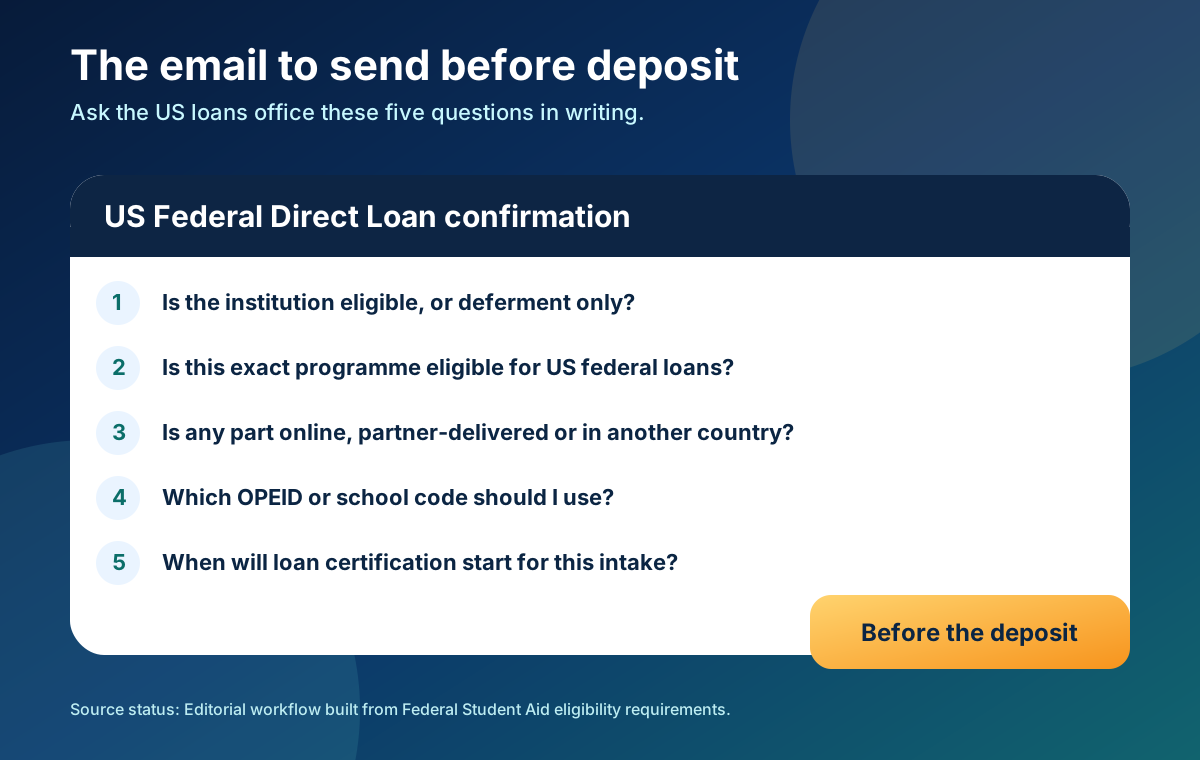
Send this to the university’s financial aid or US loans office, not just admissions:
Hello,
I am a US student considering [exact programme name], starting [month/year]. Before I pay a deposit, can you confirm in writing:
- Is the institution currently eligible to certify US Federal Direct Loans, or is it deferment only?
- Is this exact programme eligible for US federal loans?
- Is any part of the programme online, distance, delivered by a partner institution, or delivered in another country?
- Which OPEID/school code should I use on FAFSA?
- When does your office begin certifying loans for this intake, and what documents do you need from me?
Thank you.
A strong reply names the school status, confirms the programme, gives the OPEID or school-code instructions and explains the certification timeline.
A weak reply says only: “US students can apply for FAFSA.” That is not enough.
Three examples
Example 1: The school is eligible, but the programme is unusual
A US student applies to a three-year English-taught bachelor’s degree at a European university. The university appears as eligible on the federal list.
Good sign, but not final proof.
The family should ask whether the exact bachelor’s programme is eligible, whether any year is delivered by a private partner and whether any required part is distance learning. The risk is not the university name; it is assuming every programme under that name qualifies.
Example 2: The school is deferment only
A US graduate with existing federal loans gets into a European master’s programme. The school appears on the list, but the status is deferment only.
That may help the student pause existing loan repayment while enrolled at least half-time, subject to rules. It does not create new federal loan eligibility for that master’s.
This student needs a different funding plan before accepting.
Example 3: The student is doing one semester abroad
A US undergraduate wants a semester in Spain through their US college.
That is probably not a foreign-school FAFSA case. Federal aid normally runs through the US home institution because the student remains enrolled in the US degree. The right question is not “is the Spanish university on the foreign-school list?” It is “how does my US college process aid and extra costs for this study-abroad programme?”
What matters more than families think
The exact status wording. “Eligible” and “deferment only” are not close cousins. They lead to different financial outcomes.
The exact programme. Families often check the university and forget the programme. Federal aid eligibility is not just brand-level.
Timing. Some universities do not certify loans until a particular point before the start date. If your deposit deadline is earlier, you need written clarity before paying.
Living costs. Federal loan eligibility does not mean the total European plan is affordable. Housing shortages in cities such as Amsterdam, Dublin, Paris or Munich can change the budget quickly.
Return plan. If the student may return to the US for graduate school, licensure or regulated work, FAFSA eligibility is only one part of the decision.
What matters less than families think
The word “FAFSA” on a university website. It may be shorthand for US federal loan processing. It does not prove your course qualifies.
A lower tuition headline. A lower sticker price can still produce a weak financial decision if rent, travel and borrowing terms are poor.
A school’s reputation alone. A famous university can still have programme-specific limitations. A less famous school can still be eligible. Check the federal status and the programme.
Assuming Europe works as one system. It does not. Federal loan processing depends on the institution and programme, not a continent-wide rule.
Next 48 hours
- Download or search the official Federal Student Aid foreign-school list.
- Search the exact university name and country.
- Write down the status: eligible, deferment only or unclear.
- Find the university page for US Federal Direct Loans.
- Email the US loans or financial aid office using the template above.
- Build a one-year budget that separates tuition, housing, flights, visa/residence costs, health insurance and emergency travel.
- Do not pay a non-refundable deposit until the school confirms the programme and funding route in writing.
FAQ
Can Americans use FAFSA at European universities?
Sometimes. US students may be able to access federal loans at eligible foreign universities and eligible programmes. The school being in Europe is not enough. Check the federal foreign-school list and ask the university’s US loans office.
Does FAFSA give Pell Grants for a European degree?
No for direct enrolment at foreign schools. Federal Student Aid says students attending foreign schools are not eligible for federal grant programmes such as the Pell Grant or TEACH Grant.
What does “deferment only” mean?
It means eligible students may be able to defer payments on existing federal student loans while enrolled at that school. It does not mean the school can certify new federal loans for the European degree.
Is a semester abroad handled by the European university?
Usually no. If the semester abroad is sponsored by a US college and credits transfer back into the US degree, aid is normally processed through the US home institution.
Does an eligible school mean every degree is eligible?
No. Families should confirm the exact programme. Programme length, credential type, delivery mode, partner institutions and location can matter.
Should I use private loans if the school is not eligible?
That is a personal finance decision. Compare total cost, interest rates, repayment protections, currency risk and whether the degree supports your likely career path. Do not use private loans just to make an unclear plan work.
Related GradSharp reading
- Use American Students Studying in Europe: The Degree, Cost and Career Checks Before You Apply for the full degree, cost, recognition, language and post-study route checklist.
- Use European Bachelor’s vs US College: What American Families Misread Before Applying if the decision is specifically a European undergraduate degree versus a US college.
- Use 529 Plans and European Universities: What US Families Should Check Before Using the Money if the family is also asking whether 529 funds can be used for a foreign university or study-abroad route.
Source-checked notes
Checked on 2026-06-29.
- Federal Student Aid foreign-school student FAQ: student eligibility, FAFSA process, eligible vs deferment-only distinction, eligible programme rules, short-term study-abroad handling and grant limitation.
- StudentAid.gov international schools list: school names, OPEIDs, countries and status labels such as eligible and deferment only.
Readers should confirm live details with Federal Student Aid and the university’s US loans office before applying, borrowing or paying a deposit.